I have recently returned from a two-week culinary tour - a fine-dining marathon with the self-imposed challenge of taking as many photos as possible. The purpose? Aside from eating really well, to accelerate my learning, improve compositions and streamline my editing workflow. After all, online guides and Youtube videos can only take you so far. Over the next few weeks, I'll be distilling some of the lessons I learnt along the way. To begin, let's break down the first critical element of food photography - perspective.
NEUTRAL
Before I started learning the principles of photography, I had an almost dogmatic approach to 'food photos'. I believed that the best images were those that replicated the point of view of a diner. My thought process was based on the fact that dishes are created and plated with aesthetics in mind. Therefore, a neutral angle allows the viewer to experience the dish in the same way as the diner would. Whilst I have learnt to appreciate different points of view, I would still consider this the most versatile angle, approximately 30° from camera to plate.
In this example, the soft focus in the background is intended to draw the eye towards the dish.
*Use when you want a diner's point of view.
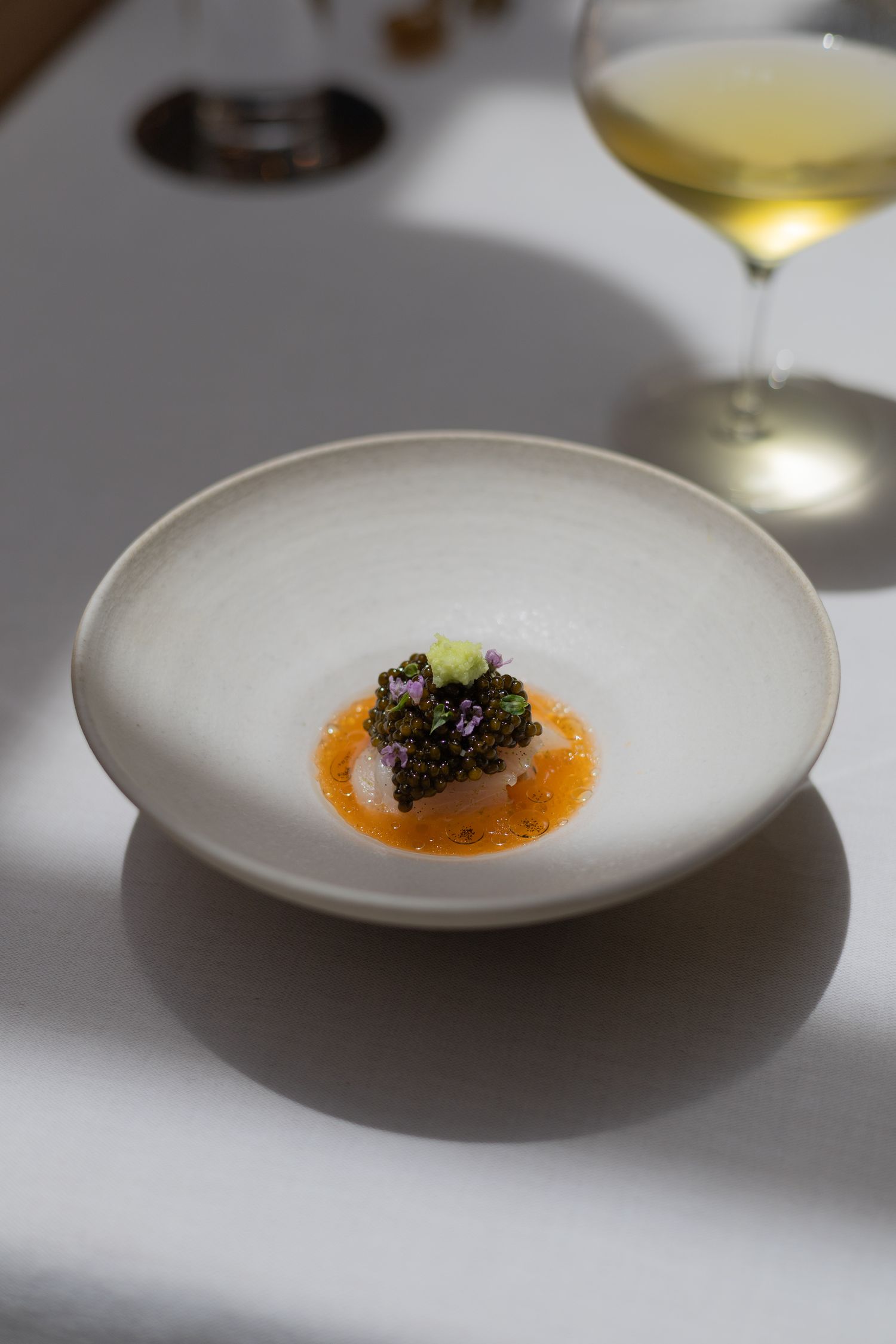
Kampachi Crudo at Zén, Singapore.
TOP-DOWN
To be honest, I used to hate top-down photos. How often would you find yourself standing on the table and looking down at your dinner? Over time, however, my perspective has shifted. I realise that photography has an amazing ability to not only document, but to also emphasise a quality or emotion. In the case of a top-down angle in food photography, there are few better ways to convey generosity at the table.
The second reason to opt for a 90° angle is to highlight symmetry. This can be in the form of negative and positive space, balance in the plated components or even symmetry in a single ingredient.
In this example, the butterflied lobster provides balance.
* Use when you want to convey generosity or emphasise symmetry.
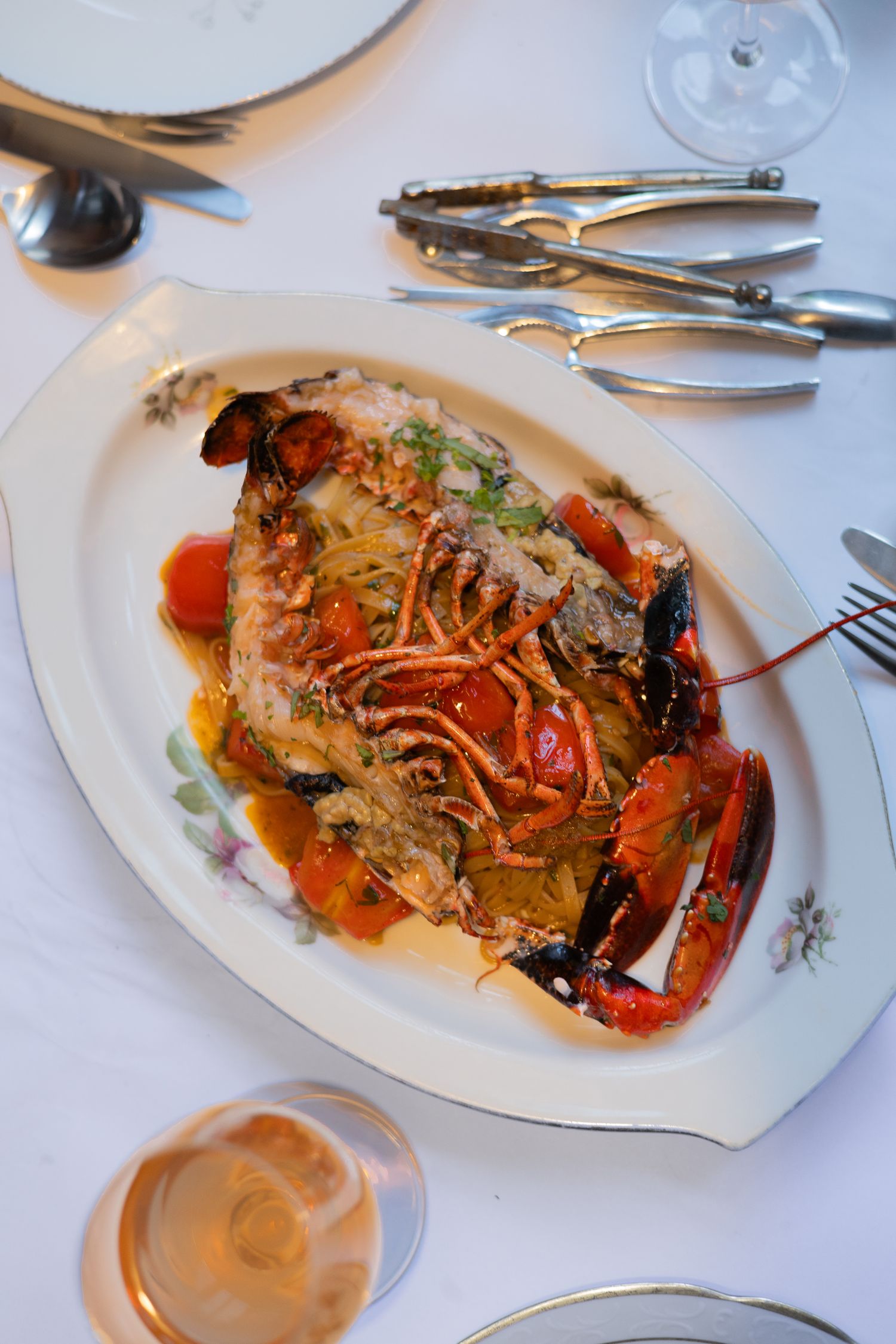
Danish Lobster tagliatelle at Silberbauers, Copenhagen
LOW ANGLE
Finally, the low angle. Fortunately plating trends have moved on from the late 80's and 90's with its emphasis on creating height. Nevertheless, there are still many reasons to shoot on a lower angle, around 10-15°. Opt for this perspective if you want to highlight intricate components or layering.
In this example, the abundance of Manjimup truffles is enhanced and the hidden detail in the piping is exposed.
* Use when you want to focus on details or layering.
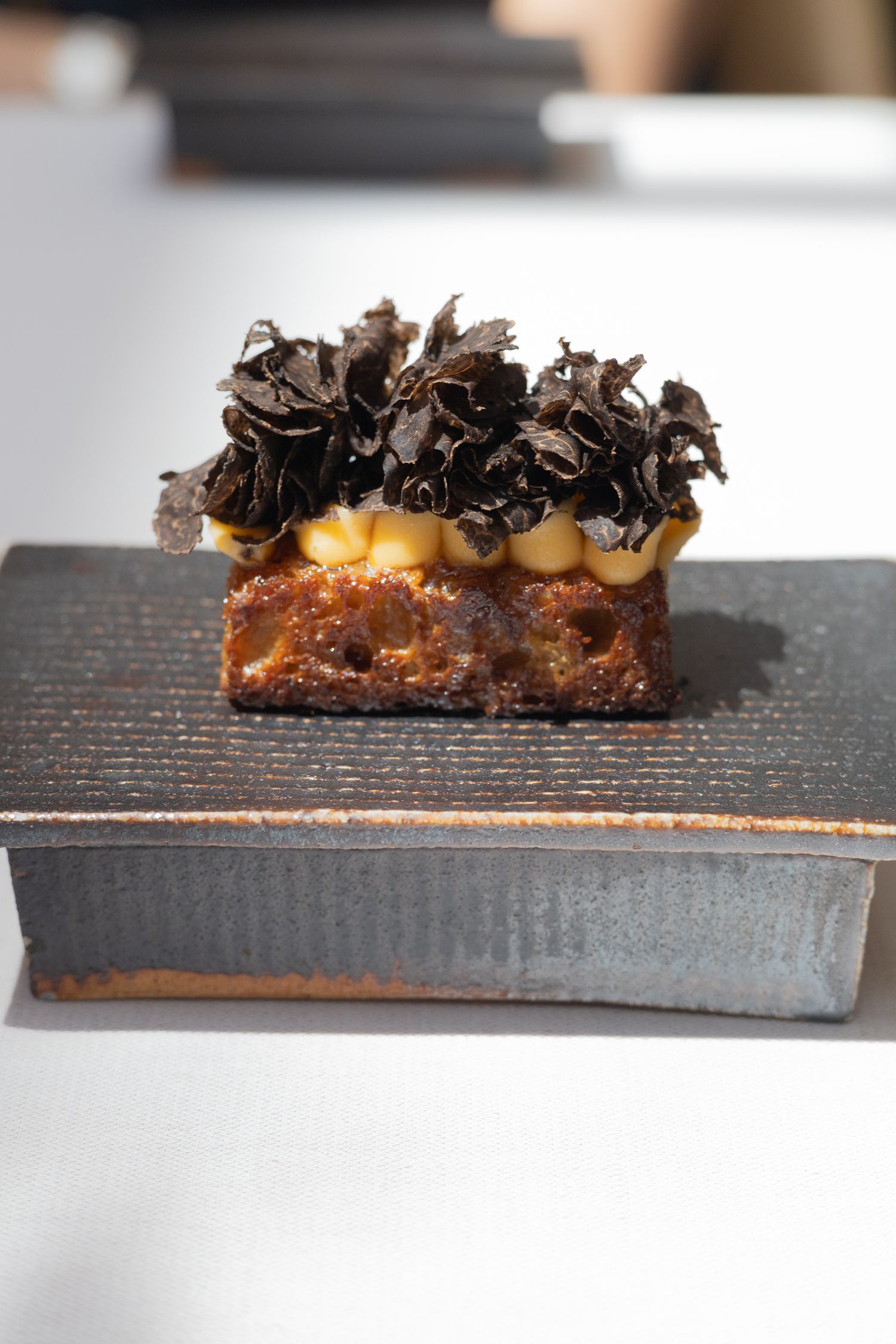
Truffle Toast at Zén, Singapore.
BONUS - MACRO
If your lens and light permit, macro photography can be a great way to highlight detail. Look for repetitive patterns (eg. caviar) or identifiable components (eg. layers in pastry).
In this example, the close-up allows the ants to become visible. And no, I am not moonlighting as an entomologist, this is in fact a petit four.
* Use when you want to focus on fine detail.
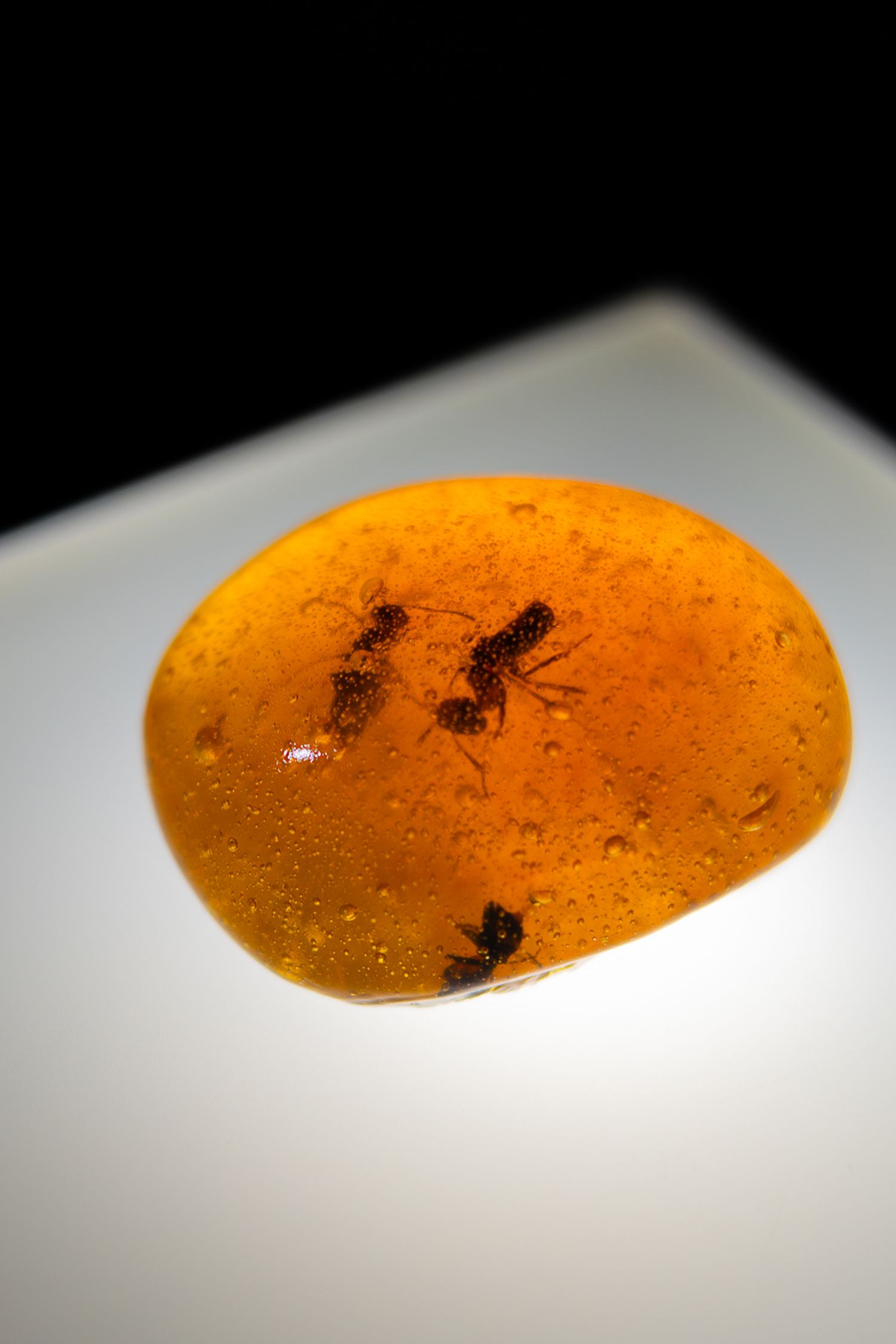
Ants in Amber at Alchemist, Copenhagen
